



AfCFTA chief, FESTU discuss Trade Unions' role as Somalia moves into Africa's Free Trade Market
 0
0
- Visits: 795
-

- Share
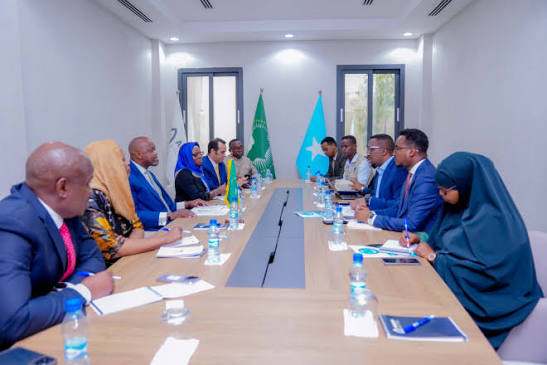

Somalia’s national trade union federation is calling for stronger labor protections and a formal role for workers in implementing the African Continental Free Trade Area as the country moves from ratification to participation in Africa’s single market.
The call was made Monday during talks between African Continental Free Trade Area (AfCFTA) Secretary-General Wamkele Mene and leaders of the Federation of Somali Trade Unions (FESTU), led by its secretary-general, Omar Faruk Osman.
The meeting took place during Mene’s first official visit to Somalia from 16 to 18 August, as the country prepares for the practical implementation of the continental trade agreement. Somalia recently completed its domestic ratification process and is now preparing measures that would allow Somali businesses and products to trade under the AfCFTA framework.
For FESTU, Somalia’s entry into a market of more than 1.4 billion people presents opportunities that go beyond increasing the volume of trade. The federation wants the process to contribute to building Somalia’s productive economy, creating decent jobs and giving workers and their unions a voice in decisions on trade and investment.
The federation said decisions on trade liberalisation, investment and economic integration have consequences for employment, wages, working conditions and labour rights. Reflecting positions promoted by the International Trade Union Confederation (ITUC) and ITUC-Africa, FESTU called for institutionalised social dialogue and permanent trade union representation within relevant AfCFTA governance structures.
"Workers are at the heart of production, services and economic development. As Somalia advances its participation in the AfCFTA, we want to see trade and investment creating decent jobs, protecting labour rights and delivering real benefits to working people and their families, with trade unions having permanent and structured engagement with the AfCFTA,” Osman said.
His visit comes at a significant moment for Somalia. The government says implementation of the AfCFTA could give Somali businesses access to the wider continental market while creating opportunities to expand exports, encourage value addition and attract investment. Somalia is also looking towards its first exports under AfCFTA preferences as implementation progresses.
FESTU says that opportunity should also encourage a shift in how Somalia sees itself within African trade. Rather than participating mainly as a consumer and importer, the federation believes the country should strengthen its ability to produce, process and export goods to African markets.
FESTU credited the minister of commerce and industry, Ambassador Gamal Mohamed Hassan, with encouraging an inclusive, social dialogue-based approach to AfCFTA implementation by engaging government, business and organised labour.
The national trade union federation views that tripartite engagement as particularly important as Somalia begins translating its AfCFTA commitments into national policies and practical measures. It says cooperation among the three parties can help ensure that increased trade and investment support decent employment and respect for workers’ rights.

SOURCE:-HOL



 Facebook
 Twitter
 Youtube
 Google+
 RSS Feed
AfCFTA chief, FESTU discuss Trade Unions' role as Somalia moves into Africa's Free Trade Market
.