



Garissa pastoralists face mounting losses as El Nino rains fail
 0
- Visits: 68
-

- Share
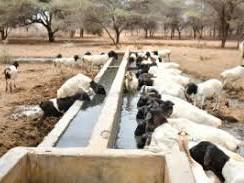

Goats and sheeps taken to a watering point in Afuene, Lagdera sub county.
Livestock carcasses scattered across the outskirts of Garissa town tell a grim story of a community struggling to survive as drought tightens its grip on the arid county.
For pastoralists, whose livelihoods depend on their herds, the prolonged dry spell has brought growing uncertainty.
Animals are dying, water sources are dwindling, and access to pasture is increasingly scarce across several sub-counties. Deteriorating conditions have heightened fears of widespread livestock losses and worsening food insecurity.
The severe dry spell comes after residents had anticipated relief following forecasts of El Niño rains.
The worsening crisis has prompted renewed calls for urgent government intervention, with local leaders warning that more families face hunger unless assistance arrives quickly.
In Afuene, Baraki MCA Hassan Geley led a section of leaders in calling on the national and county governments to intensify relief efforts and fast-track the distribution of food, livestock feed and water to affected settlements.
Geley said the situation required urgent and coordinated action, warning that delays in delivering essential supplies could expose more households to hunger while accelerating the loss of livestock.
He urged both levels of government to prioritise the hardest-hit communities, particularly those in remote settlements where access to water, pasture and food was becoming increasingly difficult.
Garissa Human Rights Network chairman Mukhtar Osman also called for a more urgent response, saying the government had a responsibility to protect citizens from suffering during crises such as drought.
"I want to call upon the authorities to move with speed and strengthen the delivery of emergency supplies, including livestock feed as well as water and ensure that assistance reaches residents before the situation deteriorates further,” he said.
The calls reflect growing concern among pastoralist communities, where the absence of rainfall is worsening an already difficult situation and threatening the livelihoods of families that depend on their animals for survival.
In Shanta Abaq, herder Mohamed Hussein expressed frustration over the deteriorating conditions, saying the continued lack of rainfall had placed enormous pressure on his household, which was already struggling to meet its daily needs.
Another pastoralist, Hussein Ali, warned that the situation could deepen food insecurity, particularly among households whose livelihoods had been severely affected by livestock deaths and dwindling access to essential resources.
With livestock losses mounting and water becoming increasingly difficult to access, pastoralist families face growing uncertainty over how they will sustain their households if the dry conditions persist.
Garissa Governor Nathif Jama has acknowledged the threat posed by the drought, assuring residents that the county government had begun trucking water to villages and settlements experiencing shortages.
Speaking during this year’s Mashujaa Day celebrations, Jama said the county was working to ensure that communities affected by water shortages received assistance as the dry spell continued.
He said the county government would continue working with the national government, as well as state and non-state agencies, to strengthen the response and ensure residents were not left to bear the burden of the drought alone.
Garissa County Commissioner John Cheruiyot also assured residents that the national government was prepared to respond to the worsening situation, saying food supplies had been pre-positioned across all sub-counties.
Speaking during the Mashujaa Day celebrations, Cheruiyot said the government was ready to assist residents in the event of any eventuality as authorities continued to monitor the situation.
He said the pre-positioning of food was intended to ensure that assistance could be mobilised for communities in need, highlighting the government’s preparedness to respond to emerging challenges.
With the anticipated rains yet to materialise, leaders are urging both levels of government to ensure that relief food, water and livestock feed reach affected settlements before conditions deteriorate further.
For families whose survival depends on their herds, the urgency is clear: timely assistance is essential to help them withstand the drought, protect the livestock they have left and prevent further hardship in one of the country’s arid regions.
The worsening drought in Garissa exposes the vulnerability of pastoralist communities to prolonged dry spells and unreliable rainfall. Despite assurances from national and county officials, the growing loss of livestock and dwindling water sources highlight the urgent need for timely intervention. Beyond emergency food and water supplies, authorities must strengthen long-term drought preparedness, invest in sustainable water infrastructure and support pastoralists to protect livelihoods and prevent deeper food insecurity.

Garissa pastoralists face mounting losses as El Nino rains fail






 Facebook
 Twitter
 Youtube
 Google+
 RSS Feed
Garissa pastoralists face mounting losses as El Nino rains fail
.