



NUSOJ condemns Parliament for blocking media access and manipulating coverage
 0
0
- Visits: 1421
-

- Share
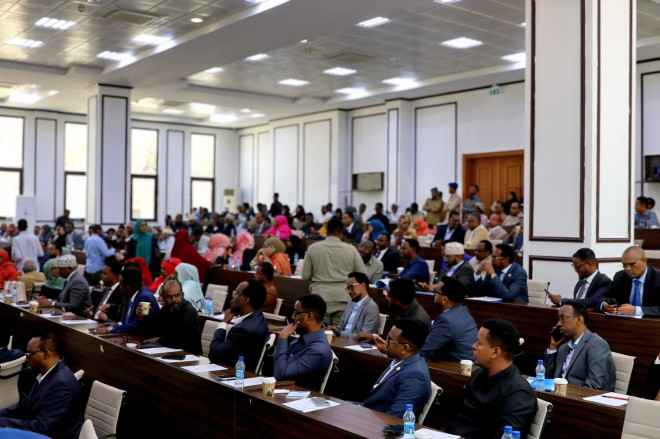

National Union of Somali Journalists (NUSOJ) has accused parliamentary leadership of suppressing media freedom by blocking reporters from covering constitutional debates and manipulating the public record of proceedings, calling the actions a serious attack on transparency and democratic accountability.
In a statement issued Monday, NUSOJ said the journalists have been obstructed, denied access to parliament and subjected to intimidation for reporting on disorder inside the legislature.
The union said the crackdown began on Jan. 28, 2026, when three female journalists, Nimo Muhudiin Ardofe of Somali Cable TV, Amina Ibrahim Abdirahman of Arlaadi TV and Rowda Hassan Taakile of Goobjoog TV were barred from entering the House of the People. NUSOJ said the journalists were targeted after posting video clips on their personal Facebook accounts showing disorder during constitutional debates.
"Punishing journalists for documenting factual events is intimidation,” the statement said, warning that the move sends a chilling message to the wider media community that reporting the truth could lead to reprisals.
NUSOJ said the situation worsened on Feb. 2, when the same journalists were again denied entry by parliamentary officials and security forces. Journalists who were already inside the building were removed to halt coverage of unfolding disputes. On Feb. 7, the union said, journalists as a group were expelled from parliament.
The union said it formally protested the actions in a letter sent on Feb. 2 to the Speaker of the House of the People, Sheikh Adan Mohamed Nur, demanding an immediate end to what it described as unlawful restrictions. While the three women journalists were later allowed back into the parliamentary premises, NUSOJ said the move was not accompanied by any public acknowledgment of wrongdoing and did not remedy the earlier violations.
Beyond physical restrictions, NUSOJ said it was deeply alarmed by reports that technology was used to alter the authenticity of parliamentary proceedings. During a session marked by shouting, whistles and loud protests, the union said artificial intelligence-based audio processing was applied to isolate and amplify the official speaker’s voice while suppressing surrounding sounds.
AI tools designed for noise reduction can filter out what is categorized as background noise, NUSOJ said, but in this case the "background” included protests, dissent and disruptions inside the chamber.
"The public received an edited soundscape where tension and resistance were digitally erased,” the statement said. "This undermines the integrity of the public record.”
The union underscored that the Parliamentary debates are defined not only by formal speeches but also by disagreement, interruptions and political contestation. Removing whistles and protest sounds strips away essential context and presents a misleading impression of calm.
NUSOJ said the growing use of technology to reshape political information poses a broader danger, eroding public trust in institutions and weakening democratic transparency.
The union demanded unrestricted access for journalists to cover parliamentary proceedings, an end to political interference in editorial decisions and firm guarantees that no administrative or technological tools will be used to distort the factual record.
"Media freedom, equal access and truthful documentation are not privileges,” NUSOJ said. "They are rights and duties at the core of democratic governance.”
Somalia’s federal parliament on Monday concluded debate on Chapter Four of the Provisional Constitution, with particular focus on Articles 49, 50 and 54, which define the federal system, relations between the central government and member states, and the division of powers.



 Facebook
 Twitter
 Youtube
 Google+
 RSS Feed
NUSOJ condemns Parliament for blocking media access and manipulating coverage
.