



Ukrainian pilot held by Al-Shabaab in Somalia appeals to Kyiv, UN
 0
0
- Visits: 734
-

- Share
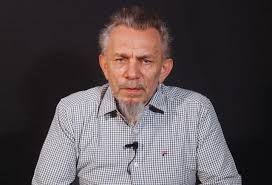

Ukrainian helicopter pilot held by Al-Shabaab since early 2024 has resurfaced in newly released footage, urging Kyiv and the United Nations to open talks for his release and that of other captives from a UN-linked flight forced down in central Somalia.
The pilot, identifying himself as Captain Oleynik Aleksandr, appearsin a videoreleased Saturday by the armed group’s media wing. In the clip, he speaks directly to Ukrainian President Volodymyr Zelensky and UN Secretary-General António Guterres.
Somalia Today could not independently verify the video’s authenticity, or when and where it was filmed.
"I speak today with you not as a free man, but as a prisoner of war held captive by Al-Shabaab in Somalia,” Aleksandr says in English.
He places his captivity "a thousand miles away” from his homeland. The use of the term "prisoner of war” suggests Al-Shabaab is deliberately framing the civilian contractor as a combatant to raise the stakes for his release.
The new footage pulls a long-running, sensitive case back into view. It also highlights the extreme hazards facing air crews who support international operations across Somalia’s fractured conflict zones.
Ukrainian helicopter pilot held by Al-Shabaab since early 2024 has resurfaced in newly released footage, urging Kyiv and the United Nations to open talks for his release and that of other captives from a UN-linked flight forced down in central Somalia.
The pilot, identifying himself as Captain Oleynik Aleksandr, appearsin a videoreleased Saturday by the armed group’s media wing. In the clip, he speaks directly to Ukrainian President Volodymyr Zelensky and UN Secretary-General António Guterres.
Somalia Today could not independently verify the video’s authenticity, or when and where it was filmed.
"I speak today with you not as a free man, but as a prisoner of war held captive by Al-Shabaab in Somalia,” Aleksandr says in English.
He places his captivity "a thousand miles away” from his homeland. The use of the term "prisoner of war” suggests Al-Shabaab is deliberately framing the civilian contractor as a combatant to raise the stakes for his release.
The new footage pulls a long-running, sensitive case back into view. It also highlights the extreme hazards facing air crews who support international operations across Somalia’s fractured conflict zones.
Hostage appeal
In the clip, Aleksandr frames his plea around responsibility. He argues that the institutions that sent the crew into Somalia’s frontline airspace must now help bring them home.
"I came here as a part of the mission of the United Nations to support the Somali government,” he says. "My crew and I performed medical evacuation flights.”
He addresses Zelensky directly: "Don’t forget about us, please use your influence to negotiate our release, let the world know that we exist, that we need help.”
Turning to the Ukrainian public, he urges pressure on the government.
"I urge you to raise your voices for us,” he says, adding that the crew remains captive and "fighting for our survival.”
Aleksandr also appeals to the United Nations, invoking the organisation’s symbolism and legal responsibilities.
"I also appeal to the United Nations, whose emblem and flag flew proudly on our mission,” he says. "We were sent here by the United Nations, yet now we find ourselves in dire need of protection and assistance ourselves.”
"The UN has a duty to secure the release of its contractors taken captive,” he adds, begging Guterres to "help return us safely”.
The UN has not publicly commented on the specific demands in the video. It previously confirmed anaviation incidentinvolving a UN-contracted helicopter in Galmudug conducting an air medical evacuation.
Forced landing
Al-Shabaab fighters seized the helicopter on January 10, 2024, after it made an emergency landing near Hindhere. This rural area sits on the dangerous fault line between government control and insurgent territory in central Somalia.
According toReuters, the aircraft encountered a defect shortly after taking off from Beledweyne, the capital of the Hiiraan region.
The flight was heading toward Wisil, a town in the Mudug region administered by Galmudug state. Wisil lies roughly 487 kilometres from Mogadishu.
The distance underscores how quickly UN-linked aviation moves between distant, loosely connected frontlines where government control often vanishes just kilometres outside town limits.
Early accounts of the landing differed. Somali officials told theAssociated Pressthat the helicopter went down due to engine failure.Al Jazeera,citing a UN memo, reported that an object struck the main rotor blade before the crash landing.
Ukraine’s Foreign Ministryconfirmed at the time that four Ukrainians were among those captured. They identified the men as crew members working under a contract linked to the UN flight.
The chaotic hours following the crash remain murky. The aircraft came down inside insurgent-held territory, limiting independent observation.APreported that militants attacked the helicopter after it landed, killing one passenger and abducting the others.
In the video, Aleksandr says the emergency landing took place "on January 2004.” This appears to be a slip of the tongue due to stress or scripting errors, as the seizure is publicly documented as occurring in January 2024.
Flight lifeline
The incident underlines the critical—and dangerous—role aviation plays in keeping Somalia’s international support architecture running.
UNSOS is mandated to provide logistical support, including aviation, to the African Union mission (ATMIS) and UN entities.
In a country where long road journeys cross contested territory and often face the threat of improvised explosive devices (IEDs), medical evacuation hinges on rapid airlift.
That reliance is especially sharp in central regions. Towns sit far apart, and state authority often thins out beyond urban perimeters.
El Buur, a district capital in the Galgadud region, lies about 325 kilometres from Mogadishu in straight-line distance.
The crash highlights how quickly a mechanical failure can leave a crew stranded far from any realistic ground rescue corridor.
Al-Shabaab has repeatedly sought to exploit these vulnerabilities. The group uses high-profile hostages to project control and gain leverage.
Linked to al-Qaeda, the grouphas wagedan insurgency against Somalia’s federal government for nearly two decades. It continues to mount attacks in the capital even as it holds rural strongholds in parts of south and central Somalia.
Somalia’s government said in January 2024 it was working to rescue the passengers. However, military officers warned at the time that accessing the specific area would be difficult due to heavy militant presence.




 Facebook
 Twitter
 Youtube
 Google+
 RSS Feed
Ukrainian pilot held by Al-Shabaab in Somalia appeals to Kyiv, UN
,